
A retrieval-augmented system that answers every question with the same assurance is dangerous exactly when its retriever has returned the wrong passages. We study how to attach a trustworthy confidence to an answer, and how to use it to decide when to answer and when to hand over to a person. We built a simulated retrieval-augmented pipeline in which answer quality depends on how much correct and misleading evidence is retrieved, and in which the system exposes three families of signals: the generator’s own token confidence, the agreement among ten sampled answers, and retrieval scores. We prove that recalibration cannot change how well confidence ranks right and wrong answers, that a calibrated score predicts its own selective accuracy, that calibration under a shift in evidence quality is bounded by how much the shift changes the mix of latent states, and that conformal risk control guarantees a target error rate under exchangeability. In simulation, the raw confidence was badly overconfident (expected calibration error 0.075). Temperature scaling did not help at all (0.075), because the miscalibration was a bias and not a slope; Platt scaling, with an intercept, reduced it to 0.008. Stacking all signals gave the best ranking (AUROC 0.971 against 0.951) and Brier score (0.057). The calibrated score predicted selective accuracy to within 0.008. Conformal risk control met its target exactly in-domain (risk 0.050 for a target of 0.05) and failed under shift (0.078 after a retrieval shift, 0.290 after a retrieval and generator shift), and re-tuning the threshold on 300 labelled target questions restored it (0.047). The aggregate calibration error also hid a serious problem: when the retrieved evidence was dominated by distractors, the system’s confidence averaged 0.42 after temperature scaling, against an actual accuracy of 0.05. All results are simulated.
Turn pages by dragging a corner, clicking a page, or with the ← → keys.
Loading article…
Open the PDF instead
DOI: https://doi.org/10.63328/IJRDES-V8RI6P10
OpenYou've reached the end of this article.
Ujval Mutyala , “ Trustworthy Retrieval-Augmented Generation Through Confidence Calibration, Signal Fusion, and Conformal Risk Control ” , International Journal of Research and Development in Engineering Sciences (IJRDES), Volume 8 , Issue 6 , pp 97 – 105 , November 2026. CrossRef DOI: https://doi.org/10.63328/ijrdes-v8ri6p10
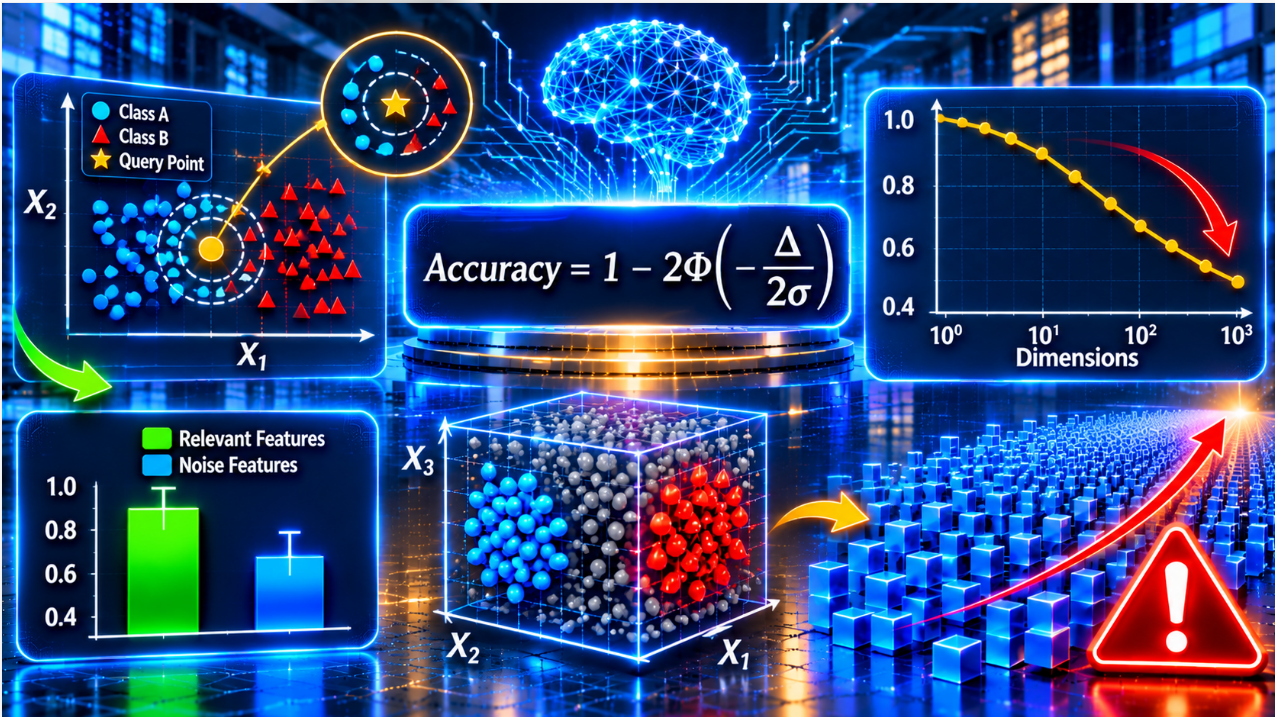
Nearest-neighbour classifiers degrade when irrelevant features are added, and the usual explanation ...

Model comparisons often report the mean accuracy over K random seeds and judge the gap against the s...
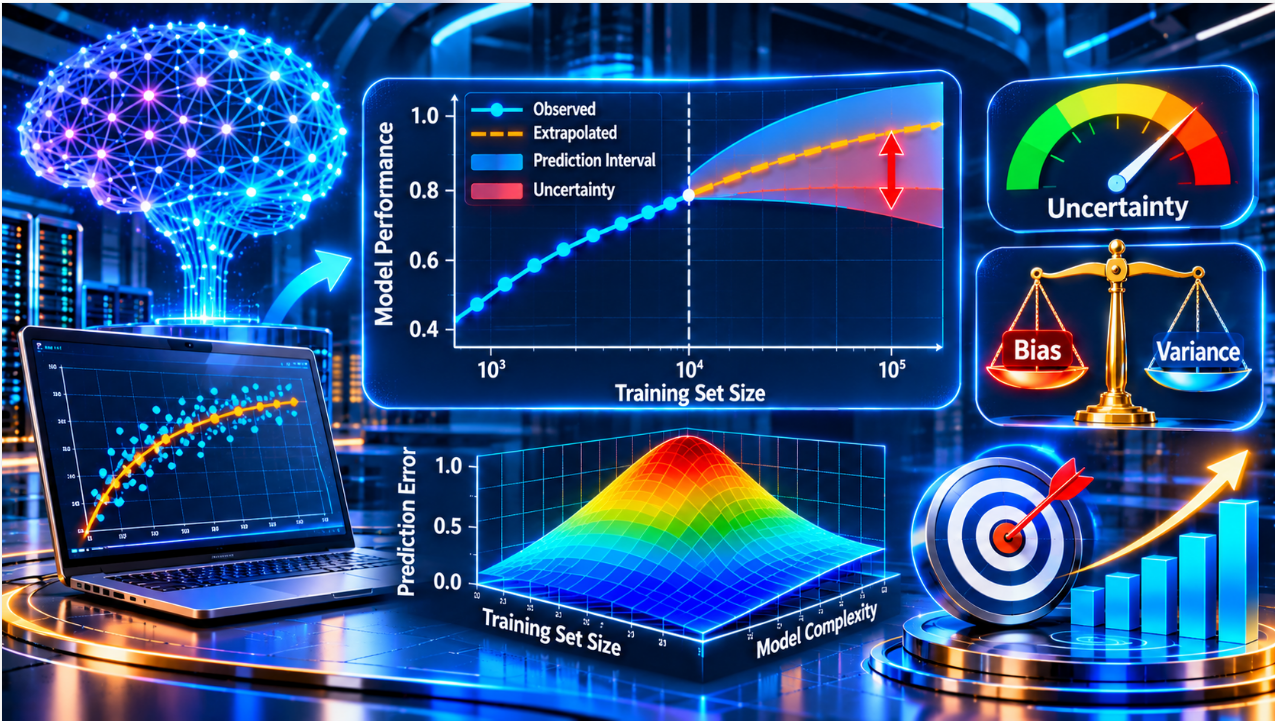
A common way to plan data collection is to train a model on a few small subsets, fit a power law to ...
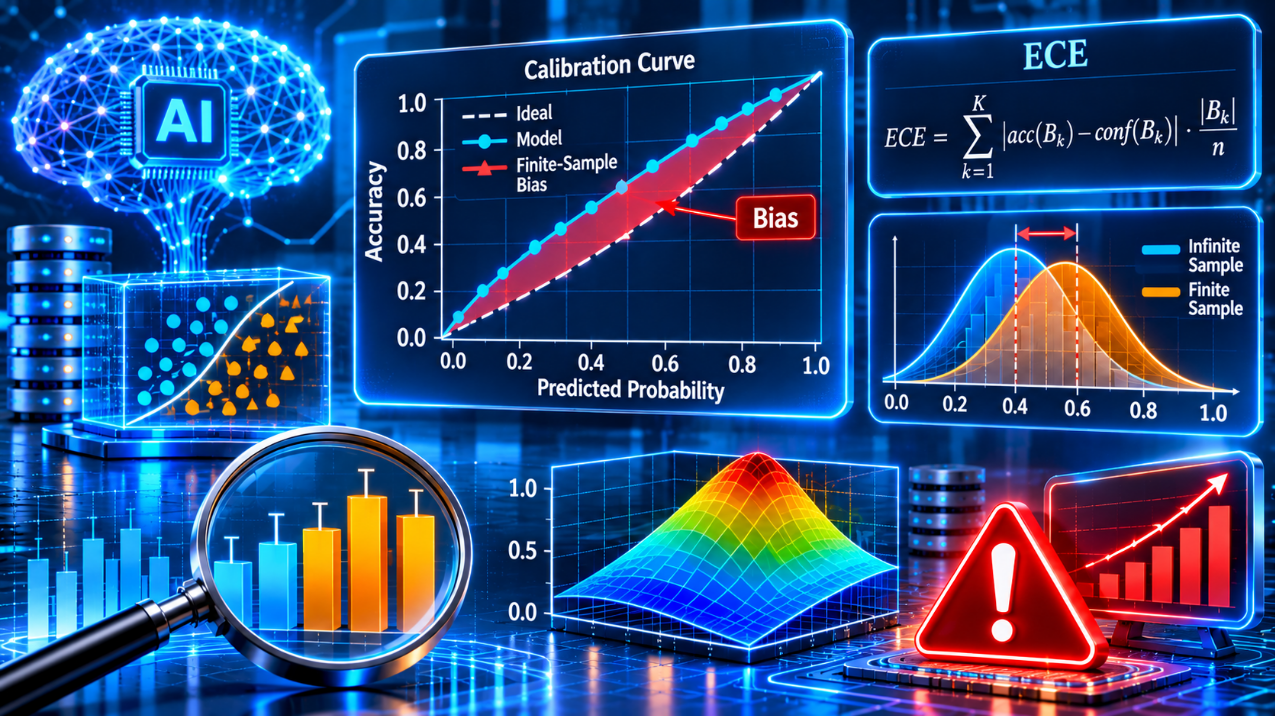
The expected calibration error (ECE) is the standard number for reporting how well a classifier’s ...